How Much Does a Website Cost UK?
A professional small business website in the UK typically costs between £2,000 and £6,000 in 2026, though options range from a basic £100/year DIY setup to £30,000+ for complex, custom enterprise platforms.
If you are a business owner planning online growth this year, finding out exactly how much does a website cost in the UK is likely your top priority. It is an incredibly common question, yet many agencies hesitate to give a straightforward answer because website project pricing can vary so wildly. A website can cost you virtually nothing if you build it yourself, or it can run past £50,000 if you need a bespoke enterprise platform with custom features.
Ultimately, your final website cost in the UK depends on design complexity, who writes the copy, how it is developed, and what it costs to maintain post-launch. Once you understand these variables, agency quotes stop feeling like guesswork and start making practical sense.
Let’s walk through the numbers step-by-step.
The Core Routes of Website Cost in the UK
Almost every web project in the country falls into one of three distinct categories. Each comes with its own upfront investment, ongoing support fees, and target audience.
Before we study the finer details, here is a clear side-by-side comparison of the core routes determining the cost of a website in the UK in 2026:
| Approach | Upfront Cost | Ongoing Cost | Best For |
|---|---|---|---|
| DIY Website Builder | £0 – £300 | £100 – £350 / year | Startups, sole traders, simple portfolios |
| Freelancer | £500 – £10,000 | £50 – £200 / month | Small businesses, custom design needs |
| Web Design Agency | £3,000 – £30,000+ | £100 – £500 / month | Established brands, complex e-commerce |
Let’s break down exactly what you get with each option.
Building It Yourself with a Website Builder
Platforms like Squarespace, Wix, and Shopify have come a long way. For somewhere between £0 and £300 to get going, plus a yearly subscription, you can have a clean, functional site live within a weekend.
The appeal is obvious. You don’t need to know a line of code, the templates look decent, and you’re in full control. For a freelance photographer showing off a portfolio, a plumber who needs a contact form and a list of services, or a new founder testing an idea, this is genuinely all you need. However, before committing to a platform, it is worth looking at how traditional content management systems compare to modern builders, especially when weighing up Squarespace VS WordPress 2026 for your business.
The catch? You’re trading money for time, and you’re boxed into whatever the platform allows. When you eventually want something it doesn’t do, you hit a wall.
Hiring a UK Freelancer
For many growing brands, hiring a freelancer is the sweet spot. Freelancers generally charge between £500 and £10,000 depending on their experience and the scope of the project.
A skilled freelancer delivers something a DIY builder cannot: dedicated strategy. They design around your conversion goals, set up proper lead tracking, and configure your basic on-page SEO. The main risk is key-person dependency; if they are sick, overbooked, or away on holiday, your support requests might take longer to resolve.
Partnering with a Web Design Agency
At the top end sit agencies, usually starting around £3,000 and climbing past £30,000 for serious projects. You’re paying for a whole team now: designers, developers, project managers, sometimes copywriters and SEO specialists.
At the high end of the market are professional web design agencies, where upfront rates start around £3,000 and can easily scale past £30,000. You are paying for a complete team: a project manager, UX designer, front-end developer, backend engineer, and often a copywriter.
This route is essential when your online platform is mission-critical. If your business depends on custom API integrations, localized wholesale engines, or high-performance e-commerce, a multi-disciplinary team is required. For retail businesses, this often starts with deciding on the right platform architecture, such as choosing between WooCommerce vs Shopify to power their online shop. While agency fees are higher, you are paying for robust project management, strict quality assurance, and predictable delivery timelines.
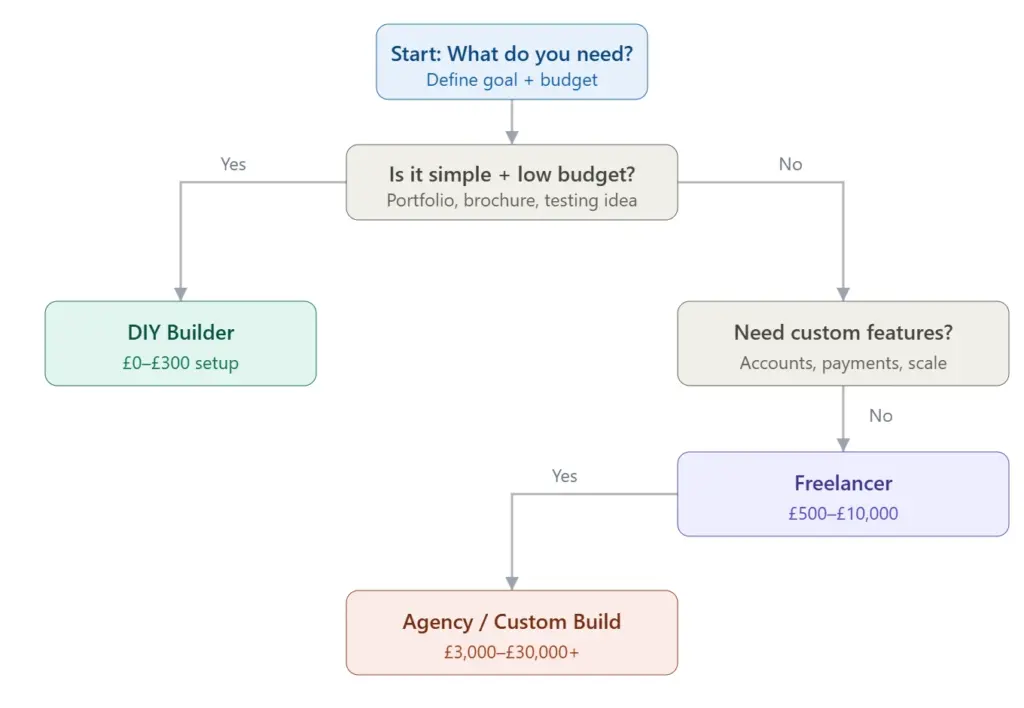
To help you map out your choices, this logical flowchart details the major decision points that shape a typical website cost in the UK:
What Drives a Website Cost in the UK Up or Down?
If you obtain three different developer quotes, they can sometimes vary by thousands of pounds. Understanding what drives overall website design cost in the UK allows you to prioritize your features effectively.
Functional Audits and Project Scope
The single most influential factor is the functional scope. A basic marketing site with five static informational pages is very straightforward to construct. In contrast, if your platform requires interactive customer portals, automated e-commerce pathways, multi-currency processing, or real-time API integrations, the developmental overhead scales proportionately.
UI/UX Design Customization
A templated layout represents the most cost-efficient route because the underlying wireframe is already built. However, bespoke design, where UI/UX experts conduct target audience research, map customer visual journeys, and craft original typography and custom interfaces, is a highly specialized, manual process that naturally increases project rates.
Strategic Copywriting & Visual Assets
An engaging website relies heavily on the quality of its marketing copy and visual media assets. According to data from Forbes Advisor, having an optimized, high-converting digital storefront directly shapes public brand perspective. If your agency takes on keyword research, copywriting, UX scripting, and custom brand photography, these additional services will be reflected in your initial setup quote.
Platform Technology Stack
Your underlying software framework affects your current development fees and future upgrade requirements. Simple content management configurations are faster to launch, but even basic frameworks are rarely completely free. While many business owners ask Is WordPress Free?,the reality is that secondary expenses like professional domain registration, premium visual builders, and essential security extensions mean your true expense is never absolute zero.
Choosing the right engine for your site dictates how much visual control your team will have down the road. If you are looking for clean visual layouts without custom hand-coding, exploring a breakdown of Webflow vs WordPress can help clarify which platform offers the right balance of flexibility and ease of use for your team.
Bespoke and Custom Web Development Cost in the UK
As your enterprise scales, you may find that standard templated plugins limit your operational efficiency. This is when investing in fully bespoke custom development becomes a highly viable business decision.
What Custom Development Entails
Unlike template edits, custom development means building your codebase entirely from a blank page. Engineers use modern systems like React, Node.js, or next-generation headless CMS setups to build robust applications. This architecture is vital for platforms requiring real-time web databases, highly secure client portals, or specialized calculations unique to your industry.
Comparing Bespoke Solutions and Standard Templates
IP Ownership: Developing custom software means your business owns its digital asset outright, avoiding reliance on external subscription fees or unexpected service policy updates.
Optimal Site Speed: Custom code contains zero redundant plugin files, ensuring fast loading speeds. The Office for National Statistics (ONS) consistently shows that digital transaction conversion rates drop significantly with every single second of page delay.
Uncapped Scalability: A custom platform allows your software to grow precisely alongside your company, allowing for deep third-party integrations and complex workflows.
Advanced Code Protection: Tailored codebases are far less vulnerable to automated attack vectors looking for known bugs in popular open-source plugins. However, if you are utilizing open-source setups, knowing how to secure a WordPress site from day one is critical for ongoing protection.
Ongoing Website Cost in the UK
Many business owners treat launching their site as the final step. However, keeping a high-performance web presence active online requires regular ongoing support.
Secure Web Hosting
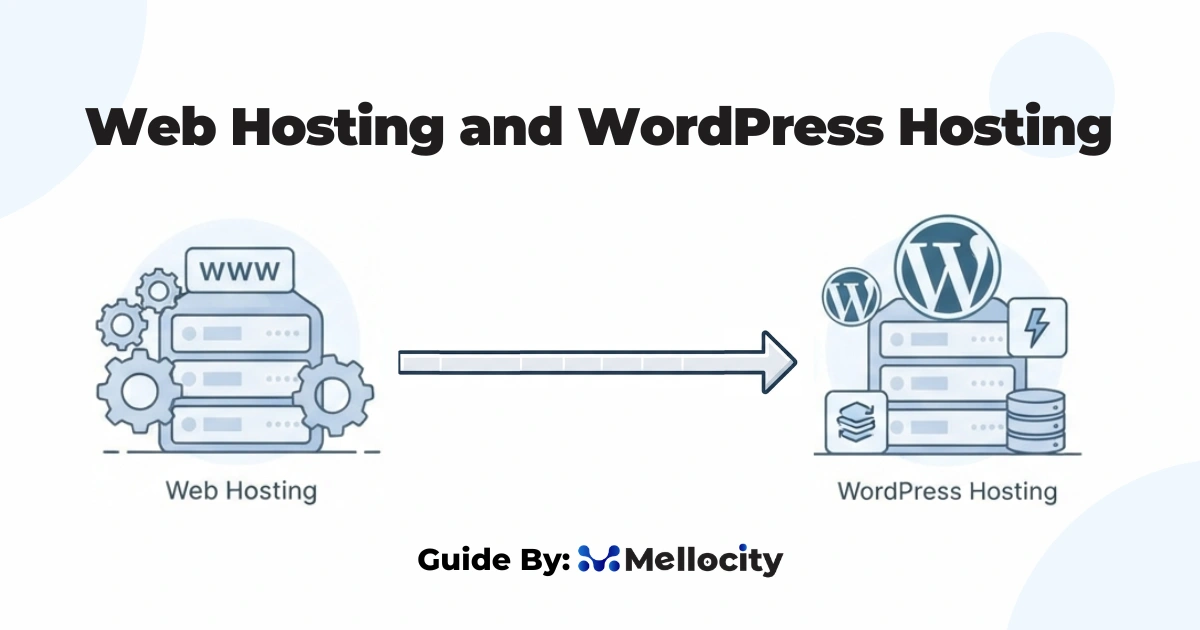
Hosting acts as your virtual rent on the web. Starter plans can cost under £10 per month, while professional cloud hosting, dedicated databases, or managed virtual private servers (VPS) can cost anywhere from £50 to £500+ monthly. Understanding the exact difference between web hosting and WordPress hostingis incredibly helpful to ensure you select the appropriate performance class without overpaying for systems you do not require.
Annual Domain Renewals
Your primary web domain needs to be renewed every year. A standard .co.uk or .com registration typically runs around £10 to £20 annually, but it is important to keep payment details updated so your platform never accidentally drops offline.
Professional Web Maintenance
Regular maintenance prevents software bugs and security issues. This is especially true for popular content management platforms that require weekly plugin, security patch, and theme core updates to remain stable.
SSL Certificates and Security Protocols
An active SSL certificate is an absolute necessity to encrypt browser transactions and establish search engine trust. While many entry-level hosts offer basic let’s-encrypt options, enterprise commerce brands often buy premium validation certificates to safeguard online customer details.
Additionally, if you operate an online storefront, payment transaction process fees will impact your monthly running costs. Modern processors like Stripe typically charge approximately 1.5% + 20p for standard domestic card transactions, making it vital to account for these transactional fees when projecting your monthly budget.
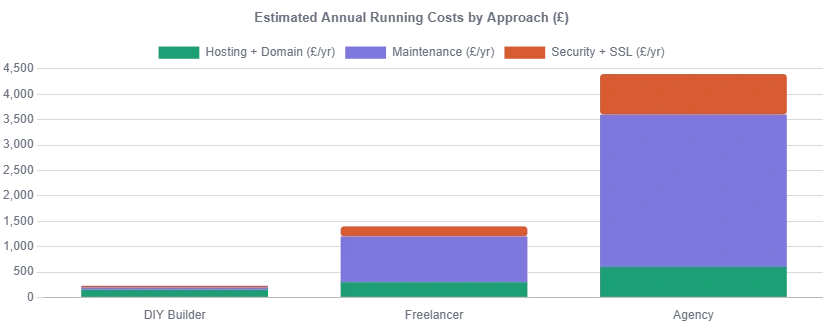
This chart visualizes how these different running costs distribute over a year across the three typical approaches:
Making the Right Choice for Your Brand
When looking at the numbers, try to avoid focusing only on the lowest price tag. A £1,000 website that is slow, confusing, and doesn’t generate leads is far more expensive over time than a cohesive £6,000 asset that consistently turns search traffic into reliable customer revenue.
Before signing off on any budget, decide what role the platform plays in your organization. If it serves as a simple digital business card, keep your upfront budget lean and utilize self-managed options. However, if your website acts as your primary marketing channel, invest in custom elements, professional UI/UX, and solid hosting to support your business’s future growth.