A blog is a regularly updated section of a website where an individual or team publishes posts/short, searchable articles or entries, used to share information, build authority, attract readers, and often support business or creative goals.
What is a blog?
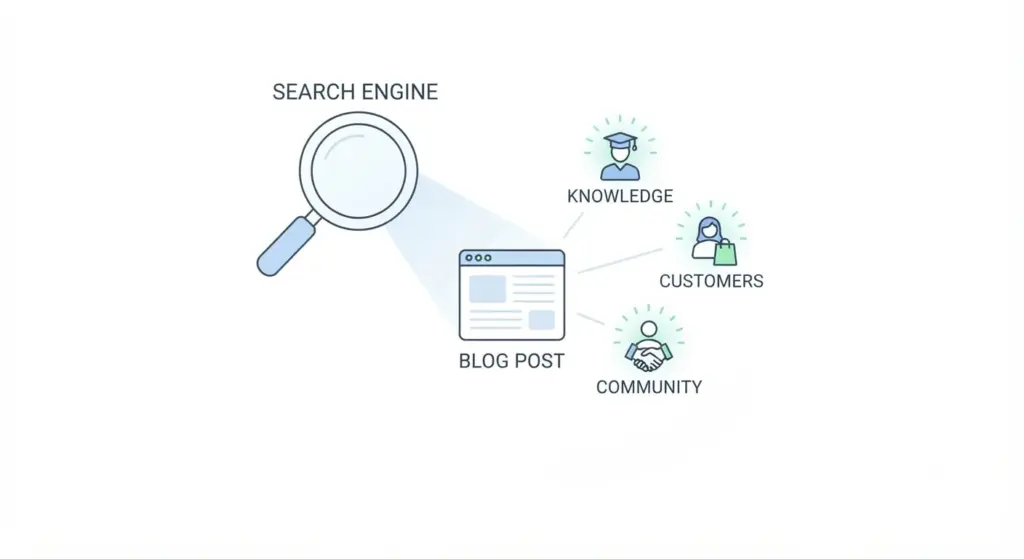
A blog is a section of a website organized as a series of dated posts. Each post is a self-contained article that appears in reverse-chronological order, but a blog is more than just timestamps: it’s a living archive of ideas, how‑to guides, opinions, case studies, and resources designed to be discoverable, shareable, and useful. In 2026, blogs remain vital because they combine two powerful things: search‑engine discoverability and human connection. Search engines still rely heavily on high-quality topical content to match users to answers, and readers still turn to long‑form content for depth, nuance, and trust.
Blogging :
- From personal diaries to publishing platforms
Blogging began in the mid-1990s with early personal pages like Justin Hall’s Links.net and the coinage of “weblog” in 1997. Early blogs were personal diaries and link collections; by the 2000s platforms like Blogger and WordPress turned blogging into a mainstream publishing tool. - Evolution into marketing, media, and commerce
Over two decades blogs evolved from hobby pages into strategic assets: content marketing, SEO, affiliate revenue, lead generation, thought leadership, and community-building. In short, blogs became both voice and engine for digital presence.
Types of blogs :
Choosing a blog type shapes content strategy, monetization options, and audience expectations.
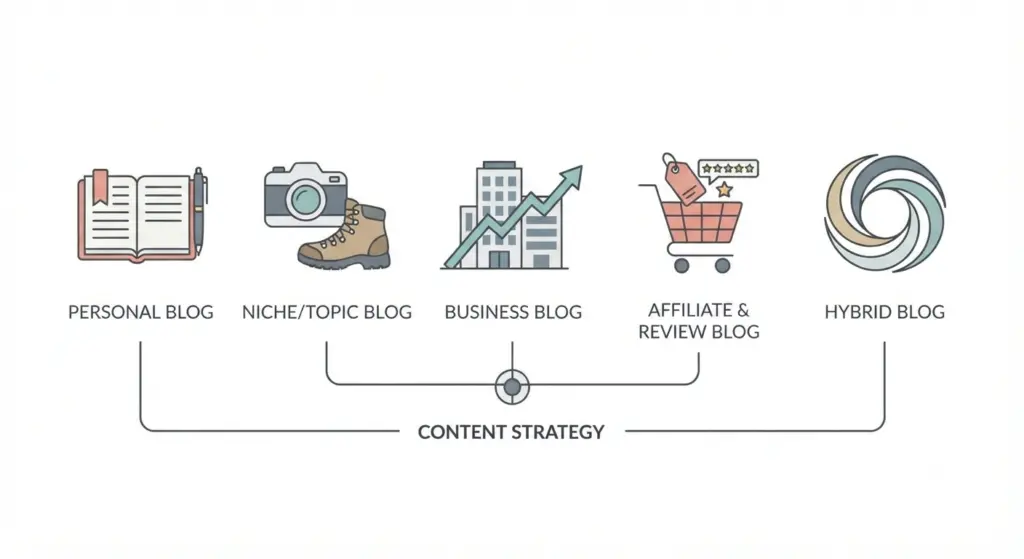
Personal blogs
Best for storytelling, lifestyle updates, personal branding, and journal-style entries. These prioritize voice and relationship more than strict topical authority.
Niche/topic blogs
Focused on a specific subject (e.g., fitness, personal finance, vegan cooking). These perform well for SEO because they target a clearly defined audience with repeated, related content.
Business blogs
B2B or B2C company blogs that educate, answer customer questions, showcase case studies, and attract leads. They’re measured by traffic, conversions, and lead quality.
Affiliate and review blogs
Built to evaluate products and earn commissions. These require transparency, testing, and trust; they succeed with detailed comparisons, clear disclosure, and high-quality reviews.
Hybrid blogs
Many successful blogs blend types: a founder’s personal voice + business resources, or a niche blog that occasionally publishes sponsored content. Hybrid approaches can be flexible but must maintain credibility.
Why start a blog in 2026?
Organic traffic and discoverability
Quality content is still one of the most reliable ways to attract search traffic. Evergreen posts can generate steady visitors for years, making a blog an investment with compounding returns.
Authority and trust building
Consistent, evidence-based posts position you as an expert. For freelancers, consultants, and founders, a blog often functions as the central portfolio and first impression.
Audience, community, and network effects
Comments, newsletters, and social shares let you build a community. Strong blogs attract collaboration opportunities—guest posts, podcast invites, partnerships—that compound reach.
Monetization pathways
Direct (products, courses, paid newsletters), indirect (lead generation, brand partnerships), and affiliate-driven models. A blog with focused traffic can convert into multiple income channels.
Skill development and IP creation
Blogging improves writing, research, SEO, editing, and content strategy skills. Plus, each post is intellectual property you can repurpose—lead magnets, newsletters, video scripts, or chapters for books.
Anatomy of a high-quality blog post :
A strong post balances readability, SEO, and usefulness.
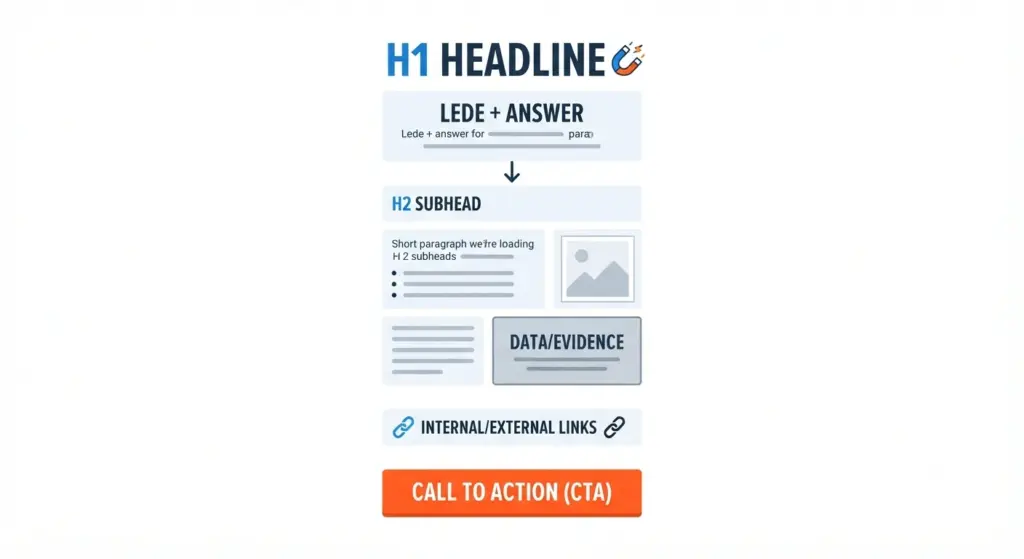
Headline: the hook and the promise
Make it specific, benefit-led, and keyword-aware. Good headline formula: [Number/Benefit] + [Topic] + [Timeframe/Qualifier]. Example: “7 Evidence-Based Sleep Habits That Improve REM Sleep in 30 Days.”
First line and lede: give the answer fast
State the main point immediately, then expand. Online readers often decide to stay in the first 10–20 seconds.
Subheads (H2/H3) and scannability
Use H2 for major sections and H3 for nested points. Subheadings act like a mini table of contents—readers scan them to find what they need.
Paragraph length and whitespace
Keep paragraphs short (1–3 sentences). Use bullet lists, numbered steps, and bolded takeaways to break dense ideas.
Evidence, examples, and data
Support claims with research, case studies, or first‑hand testing. Link to reputable sources and include concrete numbers where possible.
Visuals and multimedia
Images, charts, infographics, and short videos increase retention and make complex points easier to follow.
Internal and external linking
Internal links keep users on your site and signal topic clusters to search engines. External links add credibility—link to industry reports, academic papers, and authoritative pages.
Meta description and on-page SEO elements
Write a concise meta description (130–160 characters) explaining the value. Optimize title tags, URL slugs, and use schema where appropriate (e.g., FAQ schema).
Call to action (CTA)
Tell readers the next step—subscribe, read a related post, download a checklist, or contact you. Make CTAs contextual and low-friction.
Keyword research and SEO strategy :
Search engines prioritize helpful, relevant content. Your objective is to align your content with real user intent.
Start with user intent, not keywords
Identify the question people are asking. Are they researching, comparing, or ready to buy? Match your content format (how‑to, comparison, review) to that intent.
Long-tail vs short-tail keywords
Long-tail phrases are lower-competition and higher-conversion (e.g., “budget DSLR for travel photography 2026”). Short-tail drive volume but need more authority to rank.
Topic clusters and pillar pages
Create a central pillar article for a broad topic and link from narrower cluster posts. This organizes content for readers and signals depth to search engines.
On-page signals and technical SEO
Fast page speed, mobile-first design, accessible HTML structure, descriptive image alt text, and secure hosting (HTTPS) matter. Core Web Vitals and page experience still affect ranking.
E‑A-T (Expertise, Authoritativeness, Trustworthiness)
Show credentials where appropriate, cite sources, include author bios, and maintain transparency about sponsored content or disclosures.
Content formats that work in 2026
How‑to guides and tutorials
Step-by-step instructions solve problems and attract intent-driven searchers.
Pillar content and comprehensive guides
Deeply researched cornerstone content tends to rank well and acts as a hub for cluster posts.
Case studies and data-driven posts
Original research or customer success stories build credibility and linkability.
Lists and roundups
Digestible and shareable—useful for quick answers and link building.
Opinion and thought leadership pieces
These differentiate your voice and can attract attention, but should be backed by reasoning or data.
Interviews and guest posts
Cross-pollinate audiences and bring fresh perspectives to your blog.
Content planning and editorial calendar:
Define realistic cadence and scope
Start with what you can maintain—one well-crafted post per week often outperforms rushed daily posts.
Create an editorial calendar (topics, deadlines, owners)
Plan 3–6 months ahead. Use recurring themes and seasonal content. Track content types: evergreen, seasonal, promotional.
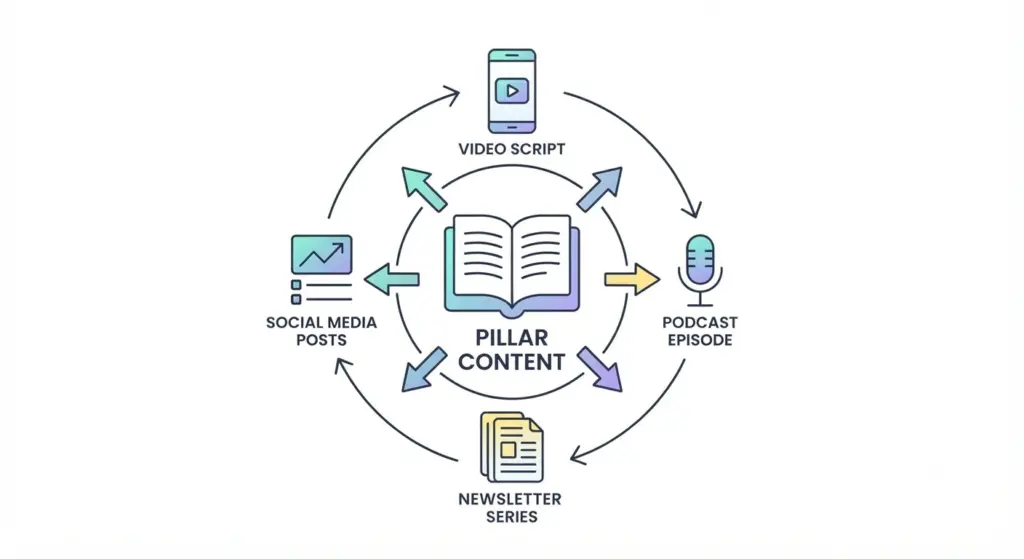
Reuse and repurpose content
Turn popular posts into videos, newsletters, or downloadable PDFs. Repurposing multiplies reach with less new effort.
Batch work and templates
Batch research, writing, and editing sessions. Use templates for recurring post types (product review, case study) to speed production.
Measuring success:
Not every metric is equally valuable. Focus on those tied to real goals.
Traffic vs. engagement vs. conversions
Traffic is a top‑of-funnel metric. Engagement (time on page, scroll depth) shows content quality. Conversions tie blog performance to business outcomes—email signups, demo requests, product purchases.
SEO-specific KPIs
Organic traffic, ranking positions for target keywords, backlinks acquired, and impressions in search console.
Audience metrics and retention
Returning visitors, email subscribers growth, and comments indicate a loyal audience.
Revenue and ROI
For monetized blogs, track income per post, affiliate conversion rates, ad RPM, or revenue per visitor.
Monetization strategies that scale :
Advertising and display networks
Easy to set up but scale slowly and require high traffic. Use carefully to avoid degrading UX.
Affiliate marketing
Effective if you write honest, helpful reviews and target purchase‑intent queries.
Digital products and courses
High margins but require upfront work. Courses, ebooks, checklists, and templates convert well from trust built via blog content.
Consulting, services, and lead generation
Business blogs often exist to generate qualified leads for higher-ticket services.
Memberships and paid newsletters
Loyal audiences will pay for exclusive insights or a curated feed—works best if you already have an engaged subscriber base.
Common pitfalls and how to avoid them
Posting inconsistent, low-value content
Avoid quantity-over-quality. One useful, evergreen post is more valuable than five low-effort pieces.
Chasing keywords without intent alignment
Don’t write for search bots. Answer real user questions and deliver practical value.
Over-monetizing too early
Ads and affiliate links can erode trust. Build credibility before aggressively monetizing.
Ignoring technical basics
Slow pages, broken links, or poor mobile layouts kill retention and rankings.
Not promoting content
Publishing is the start, not the finish. Distribution through email, social, and partnerships multiplies impact.
Accessibility, ethics, and legal considerations
Accessibility best practices
Use semantic HTML, alt text for images, descriptive link text, and readable font sizes. Inclusive design widens your audience and is often legally required in some jurisdictions.
Transparency and disclosures
Always disclose sponsored content and affiliate relationships to maintain trust and comply with regulations (e.g., FTC in the U.S.).
Copyright and fair use
Use licensed images or originals. Credit sources, and avoid republishing others’ proprietary content without permission.
Data privacy and email compliance
Follow local laws for data protection and anti-spam: provide clear opt-ins, easy unsubscribe links, and store subscriber data securely.
Tools and platforms:
Hosted platforms (ease of use)
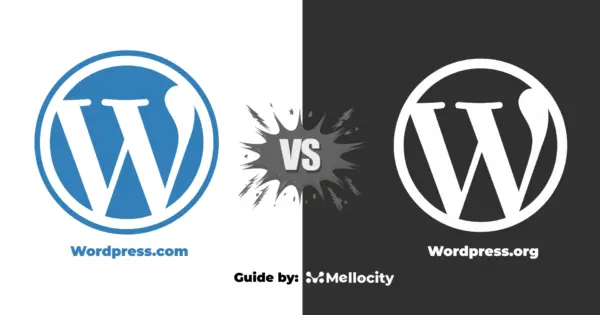
Examples: WordPress.com, Substack, Wix, Squarespace. Great for beginners, fast to implement, often with hosting and maintenance bundled.
Self-hosted WordPress (flexibility & scale)
WordPress.org on a managed host gives full control: plugins, themes, advanced SEO, and e-commerce integrations. Requires maintenance, security, and backups but scales for business needs.
Niche publishing platforms
Substack and Ghost are excellent for newsletter-first creators who want simple membership and subscription features.
Headless CMS + static site generators
For developers and performance-driven sites: content stored in a headless CMS (Contentful, Strapi) and rendered by frameworks (Next.js, Hugo). Fast and highly customizable but needs technical resources.
Essential supporting tools
Keyword research: Ahrefs, SEMrush, or free tools like Google Keyword Planner.
Analytics: Google Analytics (GA4), Google Search Console, and heatmaps like Hotjar.
Email: ConvertKit, Mailchimp, or Sendinblue.
Images: Canva, Unsplash (respect licenses), or proprietary photography.
How to grow readership sustainably :
- Step 1: Solve specific, repeated problems
Publish posts that answer high-value questions your target reader already searches for. - Step 2: Build an email list from day one
Email outperforms social; even a small newsletter converts readers into repeat visitors and customers. - Step 3: Promote intentionally
Share content in relevant communities (subreddits, LinkedIn groups, niche forums) but avoid spammy behavior. Repurpose snippets for social platforms where your audience lives. - Step 4: Guest contributions and partnerships
Write guest posts on reputable sites to acquire backlinks and new audiences. Invite credible guests to your blog to tap their audience. - Step 5: Analyze, iterate, and double down
Use analytics to find posts that perform, then update and expand them. Refresh evergreen posts with new data and perspectives.
Content refresh strategy:
- Why refresh content?
Search engines reward updated, accurate content. Refreshing can quickly boost rankings and traffic. - What to update
Update statistics, add new sections, improve calls to action, add schema, and fix technical issues identified by tools like Search Console. - How often to refresh
High-traffic pillar posts: every 6–12 months. Lower-traffic evergreen posts: annually or when new developments occur.
Blogging: authenticity and resilience
Voice, vulnerability, and credibility
Authentic writing builds readership. Don’t manufacture controversy—explain your reasoning, show failures when relevant, and cite evidence.
Dealing with burnout and feedback
Use systems (editorial calendar, batch work) to avoid burnout. Treat constructive criticism as data; ignore trolling. Engage thoughtfully and set boundaries for comments and social media.
Long-term mindset
Blogging rarely delivers instant results. Treat it like compounding interest—consistent value creation leads to sustained returns.
Case studies :
Niche blog that scaled to a business
Example pattern: start with 50 targeted, deeply researched posts; convert readers via lead magnet; launch a low-cost digital product; reinvest revenue into content and promotion. This sequence—from traffic to product sales—remains a repeatable model.
Company blog driving leads
B2B SaaS companies often use detailed how‑to guides and technical explainers to attract engineers and product teams; gated content (whitepapers) captures leads for sales follow-up.
Personal brand to paid opportunities
Freelancers who blog about solved client problems can turn posts into proposals and speaking invites. Blogging functions as case studies and evidence of competence.
Checklist: launch your first blog
- Pre-launch
Define audience and core topics. Choose platform and domain. Create 5–10 foundational posts (including a pillar page) to populate launch. - Launch week
Publish first posts, set up Google Search Console and GA4, create an email signup, and share in relevant channels. - First 3 months
Commit to a content schedule, promote posts, and collect feedback. Measure traffic, subscriber growth, and engagement. - First year
Aim for consistent publication, repurpose high-performing content, and experiment with one monetization channel once you have steady traffic.
Future trends to watch:
- AI-assisted content — helpful, not replacement
In 2026, AI tools can speed drafting, ideation, and optimization. Use them for research and outlines but maintain human oversight for nuance, credibility, and voice. - Search engines and multi-modal results
Expect more emphasis on mixed media (text + images + video) in search results. Optimize posts with clear visuals and structured data. - Privacy-first analytics and first-party data
As third-party tracking wanes, email lists and first-party analytics will become even more valuable for audience insight. - Niche communities and membership models
Readers increasingly value specialized communities and are more willing to pay for high-quality, private content.
Final thoughts: is blogging still worth it?
Yes—when it’s done with clarity of purpose, consistent quality, and respect for readers. A blog is both craft and system: craft in the voice and quality you deliver, and system in the planning, SEO, promotion, and measurement that amplify it. If you want to build influence, attract customers, or create a durable creative outlet, a blog—treated as a long-term asset—remains one of the best tools available online.
Quick resources (starter toolkit)
- Platforms: WordPress.org (self-hosted), Ghost, Substack
- SEO & research: Google Search Console, Ahrefs, SEMrush, Google Keyword Planner
- Analytics: Google Analytics (GA4), Hotjar
- Email: ConvertKit, Mailchimp
- Visuals: Canva, Unsplash (check licenses)
- Content planning: Trello, Notion, Google Sheets